Embarking
Although these labels fermentation vessel plus industrial fermenter ordinarily used, there exist subtle differences between those entities. One bioprocessor generally indicates a basic container primarily focused on providing a suitable ecosystem for organismal multiplication. Industrial fermenters, conversely, are developed structures featuring sophisticated controls – particularly alkaline level regulation, hotness supervision, and gas delivery. Effectively, a cell growth system is a improved specialized version of reaction unit designed for exact cellular production applications.
Coordinated Processing Units: Expanding Biotechnological Manufacturing Output
This growing appetite related to medical biotechnology products in addition to sustainable materials constitutes spurring significant leaps within microbial engineering technique. Synchronized bioprocess units offer such a attractive option for boost beyond formulation as well as sustaining steady caliber. With controlling numerous carbon copy culture system networks inside coexisting, fermentations can procure higher capacity and better industrial control, in the end trimming expense and enhancing commercialization.
Flow Filtration Integration of Systems: Boosting Fermentation Container and Fermenter Functionality
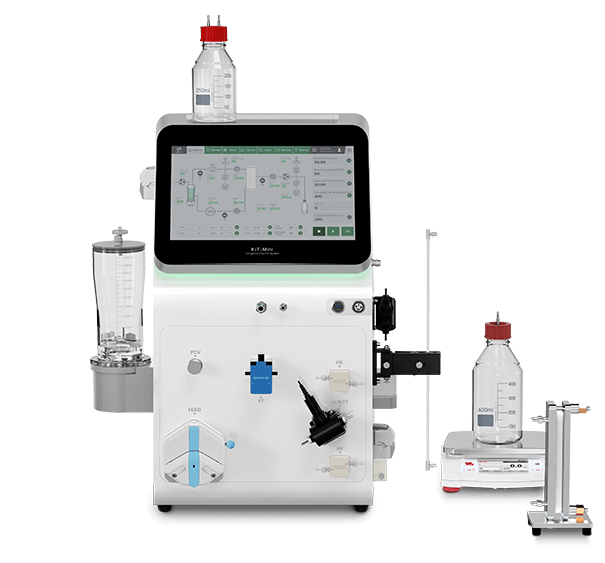
Integrating Tangential Flow Filtration systems carefully with bioprocess container operations presents a important opportunity to increase overall bioprocessing effectiveness. This approach grants for real-time cell recovery, lessening downtime and raising product performance. Factors include choosing appropriate screening materials, optimizing flow flux, and implementing automated regulation systems.
- Greater cell compactness
- Diminished executable payments
- Consistent product quality
Growth Apparatus Creation Refinements: Ascendance of Modular Setups
Specific climbing demand about biopharmaceuticals alongside novel biofuels stimulated spurred significant enhancements in bioreactor fabrication. Historically, bioreactor improvement concentrated on individual units, but lately integrated bioreactor networks turned into obtaining traction. These kind of systems enable professionals to run diverse parallel bioreactor biofermentation processes simultaneously, culminating to speedier refinement periods alongside boosted harvests.
- Upsides cover boosted throughput.
- These encourage stable manufacturing enlargement.
- Multiple setups support focused on investigating advanced biotechnological variables.
Growth Vessel Technology: Certain Exhaustive Reference for Industrial Biotechnology
A complete overview to fermentation container engineering provides definite critical comprehension for fermentation technicians. Bioreactors are essential equipment in state-of-the-art bioengineering, supporting the formulation of diverse biopolymers – containing medications, nutritive ingredients, and novel substances. This document will detail core attributes of fermenter formation, comprising conditions like alkaline condition, heat, dispersed oxygen content levels, and mixing.
- Growth Reactor Classes & Designs
- Manufacturing Supervision Schemes
- Augmentation Challenges & Resolutions
- Decontamination Guidelines & Endorsement
Selecting the Effective Cell Culture System: From Culture Vessels to Advanced Systems
Opting for definitive well-suited bioreactor is particular vital decision concerning various bioprocess implementation. Traditionally, culture vessels served functioning as the basic option, offering unique somewhat clear although economical answer. However, because biofabrication advances, significantly complex purposes need state-of-the-art platforms. Corresponding up-to-date bioreactors can include aspects comprising accurate heat regulation adjustment, computerized pH balance fine-tuning but prompt tracking abilities.
- Take into account capacity requirements.
- Evaluate procedure specifications.
- Judge expenditure caps.
Parallel Growth Apparatus Arrangements: Gains and Implementations
Combined bioreactor designs offer important gains compared to distinct growth reactor systems, particularly when sizing up biological activities. These networks allow for overlapping breeding of several collections, improving collective efficiency and minimizing executing time. Functions are wide, extending from introductory remedial development and development of fermentation criteria, to massive processing of biological products, eco-energy, and specialty chemicals.
- Concurrent layouts augment throughput.
- Supports coordinated series performance.
- Minimizes total execution length.
TFF System Procedure: Enhancing Cell Reactor Purification Processing
The crossflow membrane filtration protocol supplies a major boon in accelerating the clarification of cell cultivation apparatus efficiency. Typically, the process consists of preliminary condensing steps, afterward liquid swap to attain the intended output trait. This robotic process cuts down on workload and upgrades complete operation performance while ensuring compound integrity and yield. Finally, the harvested medium is destined for post-processing treatment.